


door 

INVESTMENT PROJECT
Chemical fumigation of grain in vertical grain storage facilities without moving the grain using the automated robotic device
SGFOne – a self-immersing in grain fumigator!
The project’s investment presentation can also be downloaded in PDF format from the page’s footer.
All rights reserved.
Graanopslagfaciliteiten kunnen horizontaal zijn (single-storey warehouses) of verticaal (silo-type grain storage facilities made of reinforced concrete or metal).
Vertical grain storage (soort silo) is the most technologically advanced and has the highest productivity. Vertical grain storage facilities (grain silos) are the most common in the world. De hoogte van de graanopslag varieert doorgaans van 6 naar 30 meter.
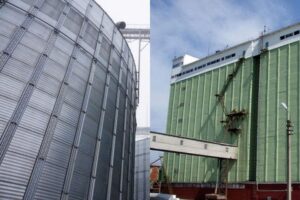
Grain silos (Vertical grain storage) facilities are grain storage systems that represent infrastructure that allows for the storage of significant volumes of grain and other bulk agricultural products. The main purpose of vertical grain storage is to protect and preserve grain from adverse environmental conditions, including pests.
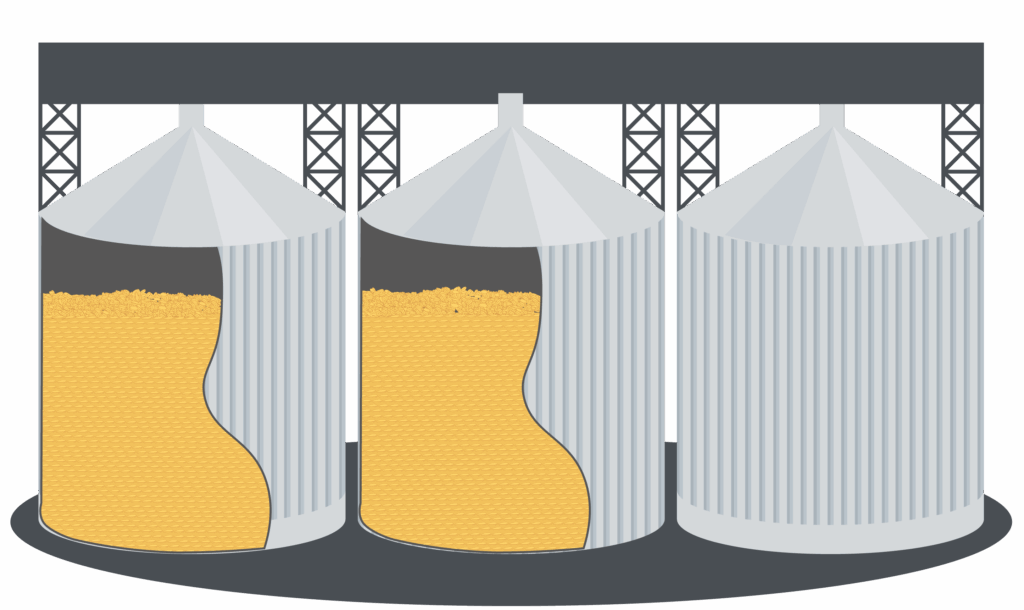
Grain production is growing steadily, as are global food production and consumption. Storage of food grains is an integral part of the agricultural system, and the preservation and storage of grains should ensure food security for humanity. The growth rate of construction of new vertical grain storage facilities is expected to increase by more than 5% per year. Grain storage silos require less space than horizontal warehouses, which is expected to contribute to the growth of vertical grain storage capacity in the coming years. North America and Asia Pacific are expected to hold the largest share of the global vertical grain bins and storage systems market by 2033. Priority for types of storage of agricultural crops in the world in vertical grain storage facilities: rice, wheat, corn, soybeans, sunflower, other types of crops.
Fumigation—the control of grain pests—is an integral part of grain storage. Fumigation volumes will increase as grain storage volumes increase worldwide.
Chemische begassing van graan tijdens opslag en transport blijft de meest gebruikelijke en toegankelijke methode om graanproducten in de mondiale graanindustrie te beschermen.
The main goals of SGFOne are to reduce environmental risks at fumigation, reduce the costs of chemical fumigation and improve the safety of fumigation in grain storage facilities, as well as reduce restrictions during fumigation through the use of robotics and automation.
Begassing van graangewassen wordt uitgevoerd na de oogst tijdens opslag in graanopslagfaciliteiten.
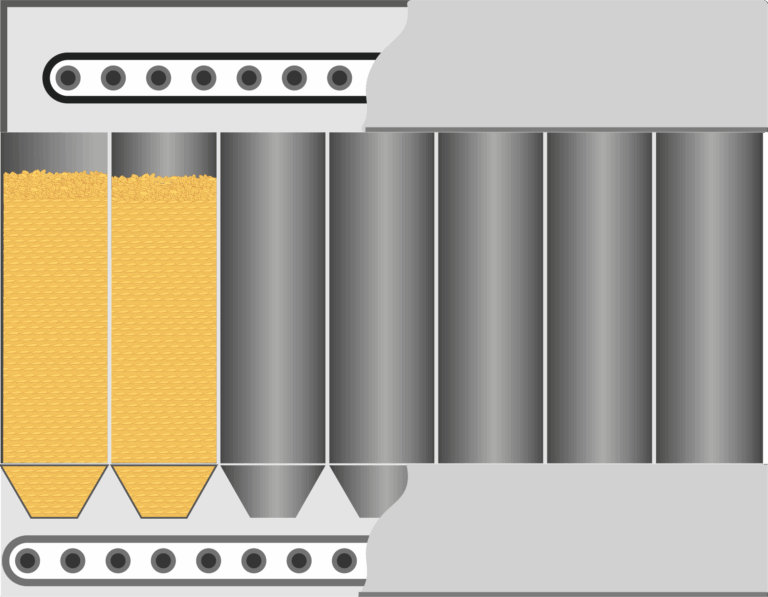
A reinforced concrete silo grain storage building usually combines several silos (bunkers) for vertical storage of grain and has upper and lower technical rooms (bovenste en onderste liftgalerijen). Metal vertical grain storage facilities are metal single bin (tanks) or combined into a group and connected to each other by a common grain transportation system.
Gebruik van elektrische graanelevatorapparatuur: transportbanden, vijzelladers, pneumatische laders, grain is loaded into the grain storage and moved for cooling in winter and for fumigation.
Graanontsmetting wordt minstens één keer en vaker tijdens de graanopslag uitgevoerd 6 maanden opslag.
Fosfine gas (PH3) wordt gebruikt voor chemische begassing van graan – een zeer giftig gas dat de luchtwegen van ongedierte binnendringt, inclusief moeilijk bereikbare plaatsen in de graanmassa, Fosfine blokkeert de cellulaire ademhaling, het voorkomen van zuurstofopname en normale oxidatieprocessen. Het verlamt ook het zenuwstelsel, wat leidt tot het verlies van het vermogen om te bewegen en te eten. Als resultaat, de vitale functies van het lichaam houden op, en het ongedierte sterft.
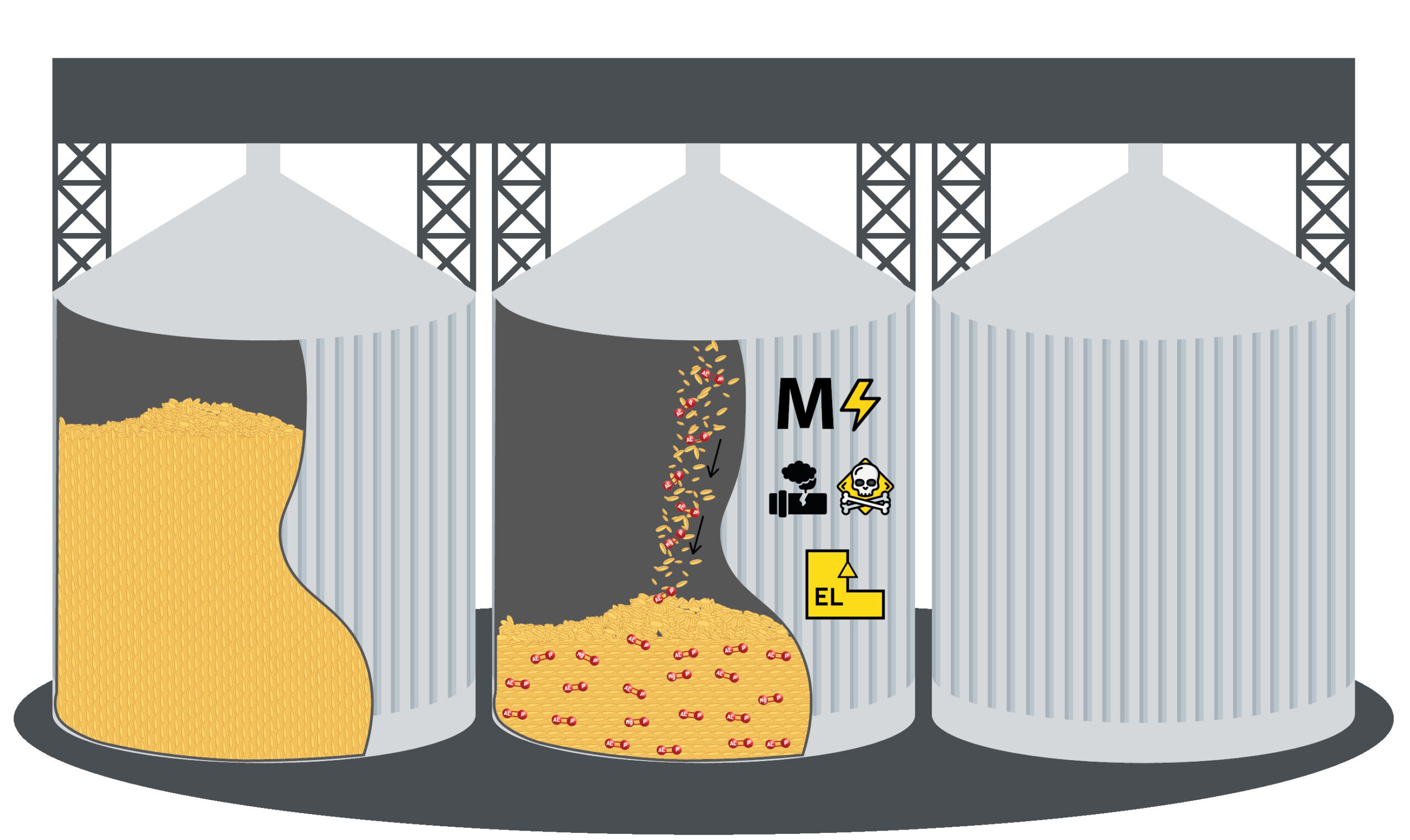
Hoewel fosfinegas zwaar is, het zinkt gewoonlijk onder zijn eigen gewicht niet dieper dan 1-2 meter in het graan, en om het volledige graanvolume in de graanelevator te ontsmetten, het graan wordt verplaatst, het verlagen van het niveau in de silo-opslag naar 2 meter en het graan opnieuw verpompen, het niveau verhogen, adding solid phosphide (later changing to gaseous phosphine) layer by layer into the capacity of the grain storage bin.
Energy-intensive machinery and equipment are used to move grain into the grain storage facility. Door gasdiffusie, tot 20% of the phosphine unintentionally spreads into thegranaries technical rooms and beyond. Hierdoor ontstaan er beperkingen voor de aanwezigheid van personeel op de graanopslagplaats zonder beschermingsmiddelen gedurende een lange periode (de periode van begassing, blootstelling, en decontaminatie (geforceerde ventilatie van deze gebouwen) en beperkt de implementatie van ander technologisch werk in de faciliteit.
Begassing wordt uitgevoerd met vaste ontsmettingsmiddelen (in de vorm van bolvormige tabletten, platen, platte tabletten, korrels) met een gewicht van 3 gram, Aluminiumfosfide of magnesiumfosfide, door de fabrikant geleverd in afgesloten aluminium blikjes met luchtdicht deksel.
Fosfide wordt in de vorm van vaste tabletten in de graanlagen gebracht (platen, korrels), waar, onder invloed van vocht uit de omgeving (in de korrels en in de lucht tussen de korrels), het reageert met de vochtige lucht en vormt gasvormig fosfine. Er komt ongeveer één aluminiumfosfidetablet van 3 gram vrij 1 gram gasvormig fosfine.
Fosfine verspreidt zich vervolgens door gasdiffusie door de intergranulaire ruimte, meestal zinkend naar een ondiepe diepte. Daarom is het belangrijk om het vaste ontsmettingsmiddel Fosfide gelijkmatig te verdelen, laag voor laag, door het hele graan, using a layer-by-layer method of introducing fumigants into grains in a vertical grain storage facility.
Bijvoorbeeld, horizontaal (vloer) graanpakhuizen, waar de hoogte van de graanopslag niet groter is dan 3-5 meter, de introductie van vaste fosfide-ontsmettingsmiddelen wordt handmatig uitgevoerd door middel van sonderen – met behulp van speciale begassingsondes (tot 2 m lang), het ontsmettingsmiddel wordt in de dikte van de korrel ingebracht en gelost tot een diepte gelijk aan de lengte van de sonde.
In conditions of great height (diepte) van graanopslag in verticale graanopslagfaciliteiten (silos) tot 30 M, this method (the probe method) of grain fumigation is impossible. In vertical (silo) grain storage facilities, phosphide is introduced into the grain layer by layer, moving it from one bin to another, with the help of grain conveyors.
Wat zijn de nadelen en risico's van het begassen van graan in een silo-graanlift met behulp van traditionele begassingmethoden?
BESCHRIJVING
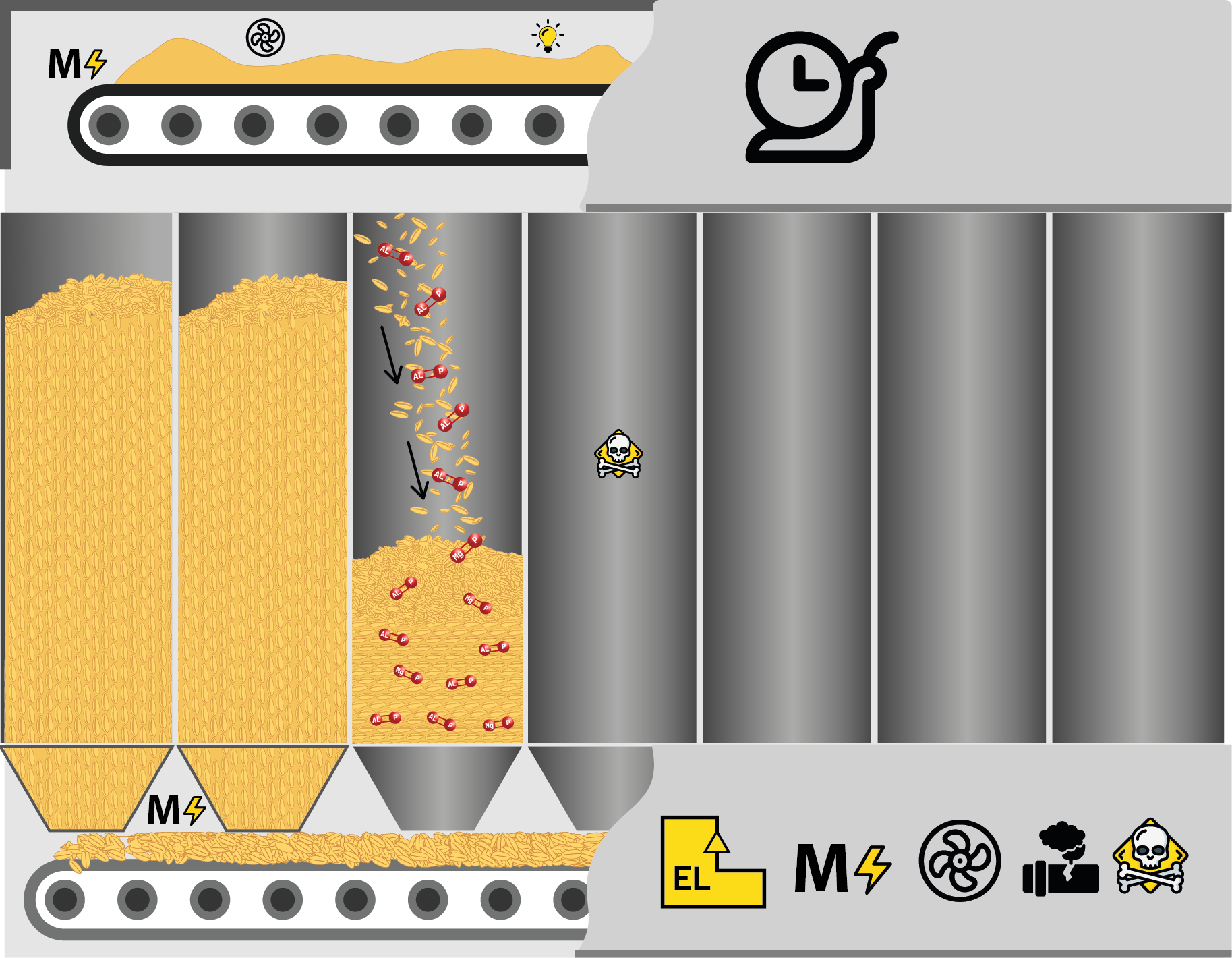
1. Volledige of gedeeltelijke verplaatsing van graan voor begassing wordt bereikt met behulp van liftmechanismen en -apparatuur.
Energy consumption of grain elevator equipment and labor costs are considered as a part of the technological process.
CLASSIFICATIE, CONCLUSIE
Economische nadelen:
1.1. Energiekosten die verband houden met de werking van apparatuur, mechanismen, en verlichting.
1.2. Arbeidskosten die verband houden met het aanhouden van personeel ter ondersteuning van het proces.
2. Long-term fumigation of grain in silos is associated with the use of other elevator systems and mechanisms, time spent on moving or lowering the grain and reloading it into the silo, during which phosphides are simultaneously loaded into the grain layer by layer.
Economische nadelen:
2. The duration of grain fumigation by the layer-by-layer addition of phosphides to the grain in the silo is determined by the sequence of technological operations in traditional fumigation technology and is proportional to the speed of grain movement (loading of grain into the bin).
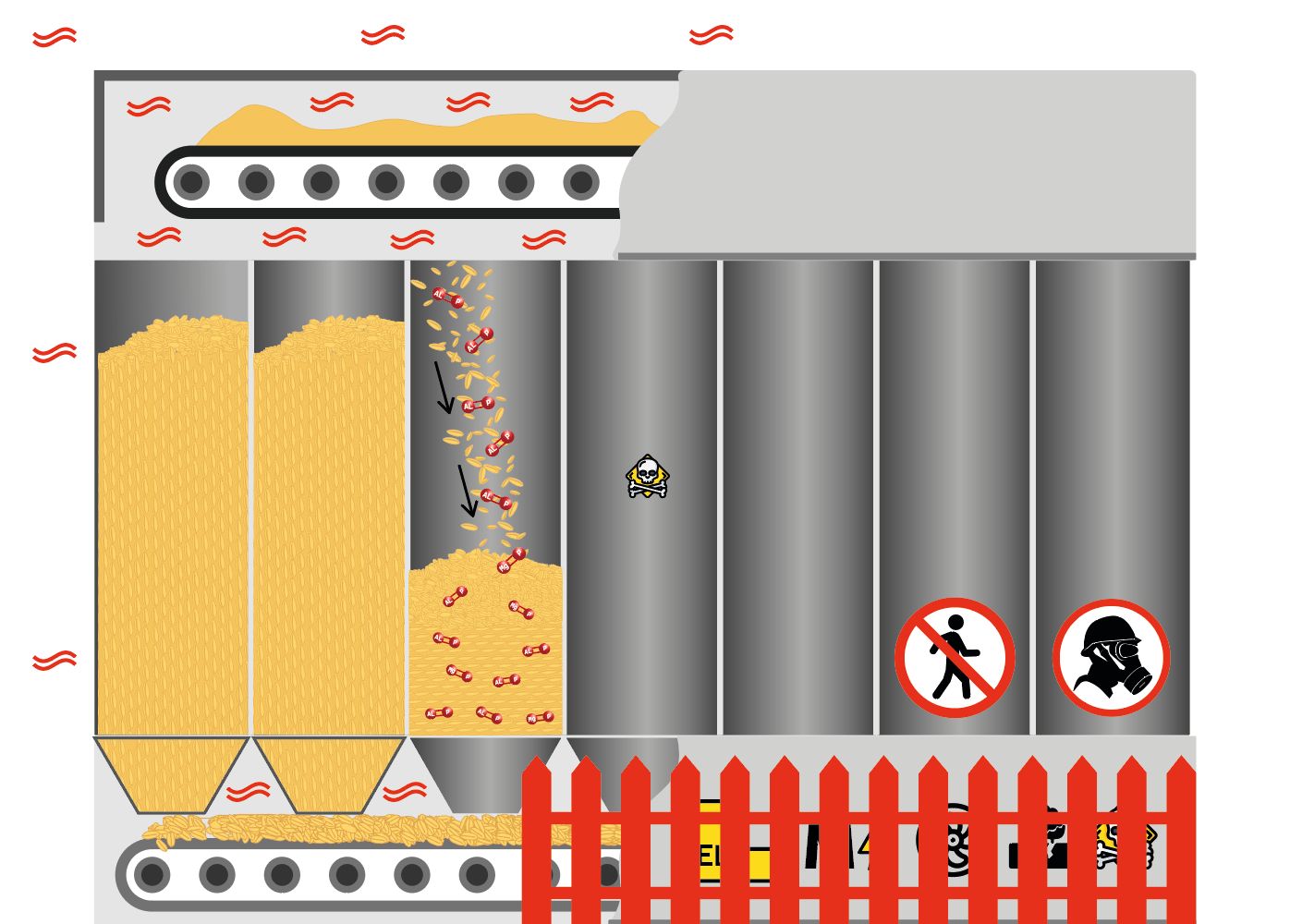
3. Downtime of the entire silo building of the grain storage facility, even those tanks in which grain fumigation is not carried out.
Restrictions on the operation of the entire grain storage facility.
Economische nadelen:
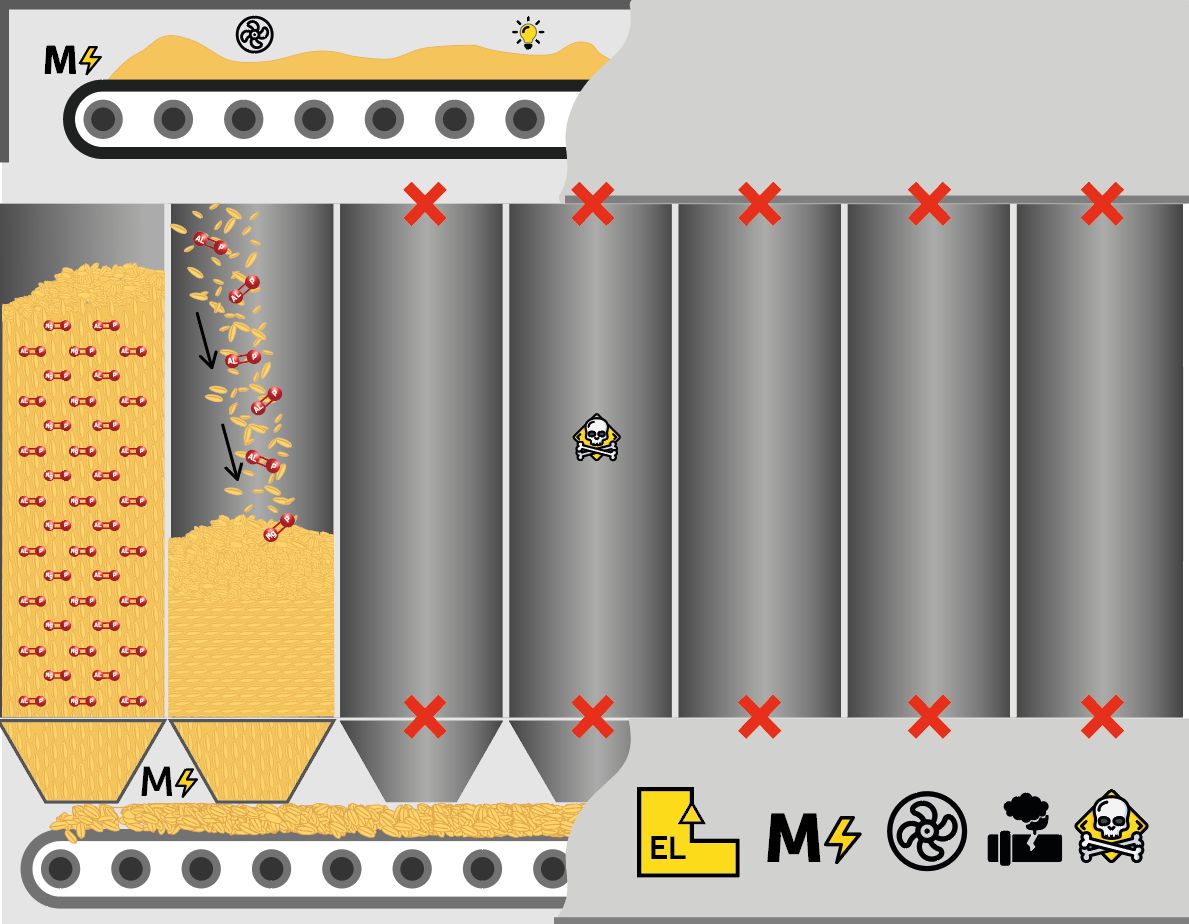
3. Vertical reinforced concrete grain storage facilities typically consist of 50 or more vertical tanks.
When fumigating grain in individual tanks, the entire grain storage building is used during grain pumping to lower the grain level in these individual tanks, and phosphine gases are distributed throughout the vertical grain storage facility by diffusion. Thus, performing other technological operations, even with unfumigated grain, becomes impossible. Fumigation of individual tanks (bin) establishes a quarantine for the entire grain storage building.
Selective, safe fumigation of individual grain tanks using traditional chemical fumigation methods is impossible.
4. Due to the continuous movement of grain and open loading of phosphines into silos (through a conveyor or hatches), there is an involuntary spread of phosphine gases (tot 20%) outside the grain storage facility under the influence of gas diffusion and wind.
Milieurisico's, industriële gevaren:
4. Fosfinegaslekkage naar andere productiegebieden van de fabriek (bovenste en onderste liftgalerijen), naar de buitenruimte van de faciliteit, en naar de omringende omgeving.
5. Hoge kosten van begassingwerken en hoge arbeidsintensiteit van begassingwerken (diensten)
Economische nadelen:
5. Hoge kosten van begassingdiensten voor de klant
6. Tijdens kortetermijnopslag van graan, sometimes focal fumigation of a separate section (laag) graan is vereist als er een concentratie van ongedierte is geconstateerd, blijkt uit een verhoogde graantemperatuur op een bepaalde diepte.


Economische nadelen:
6. Begassing van één enkele besmettingsbron in een graanopslagplaats is onmogelijk vanwege de technische onmogelijkheid om het ontsmettingsmiddel aan een afzonderlijke bron af te leveren., aangewezen punt binnen een enkele opslagcapaciteit zonder dat het volledige volume graan in die opslagcapaciteit wordt verplaatst.
7. Loosening and aerating grain is an important process for preventing grain spoilage, helping to reduce humidity and temperature, prevent mold formation and self-heating of the grain.
Technically, this is achieved by supplying air to the grain bin using special equipment or by pumping (moving) grain from one silo bin to another, which requires additional energy and labor costs.
Economische nadelen:
7. Loosening and aeration of grain is a separate technological process that requires the use of additional energy-intensive elevator equipment, technological time and labor costs.

New Possibilities in Chemical Fumigation of Grain in Vertical Grain Storage Facilities with SGFOne Technology
SGFEen – grain fumigation at specified coordinates, a new fumigation method involves fumigating with phosphides a specific target point in the thickness of stored grain – the source of contamination in the depth of stored grain in a vertical silo bin or layer-by-layer the entire volume of grain in a separate bin, without moving the grain, by a method of delivering phosphides to specified points in the grain thickness at any depth (hoogte) of grain storage, by immersing the SGFOne device (phosphide loader) deep into the thickness of the grain.
Briefly about SGFOne® grain fumigation technology: There is no longer any need to move grain in vertical grain bins or lower the grain bed level during fumigation, use energy-intensive elevator equipment to move grain, isolate individual parts of the grain storage facility due to the spread of phosphine gases – The world’s first self-immersing grain fumigator SGFEen will dive into the grain layers to a specified depth (hoogte) in the grain bin, deliver and unload the Phosphide fumigant at a specified point or throughout the entire bin (laag voor laag) and return back.
Grain fumigation in silos with SGFOne:
1) Very economical: no energy consumption by the grain storage facility, no need to move or lower the grain level in the silos, no need to operate energy-intensive elevator equipment, no personnel required to maintain the grain storage facility during fumigation.
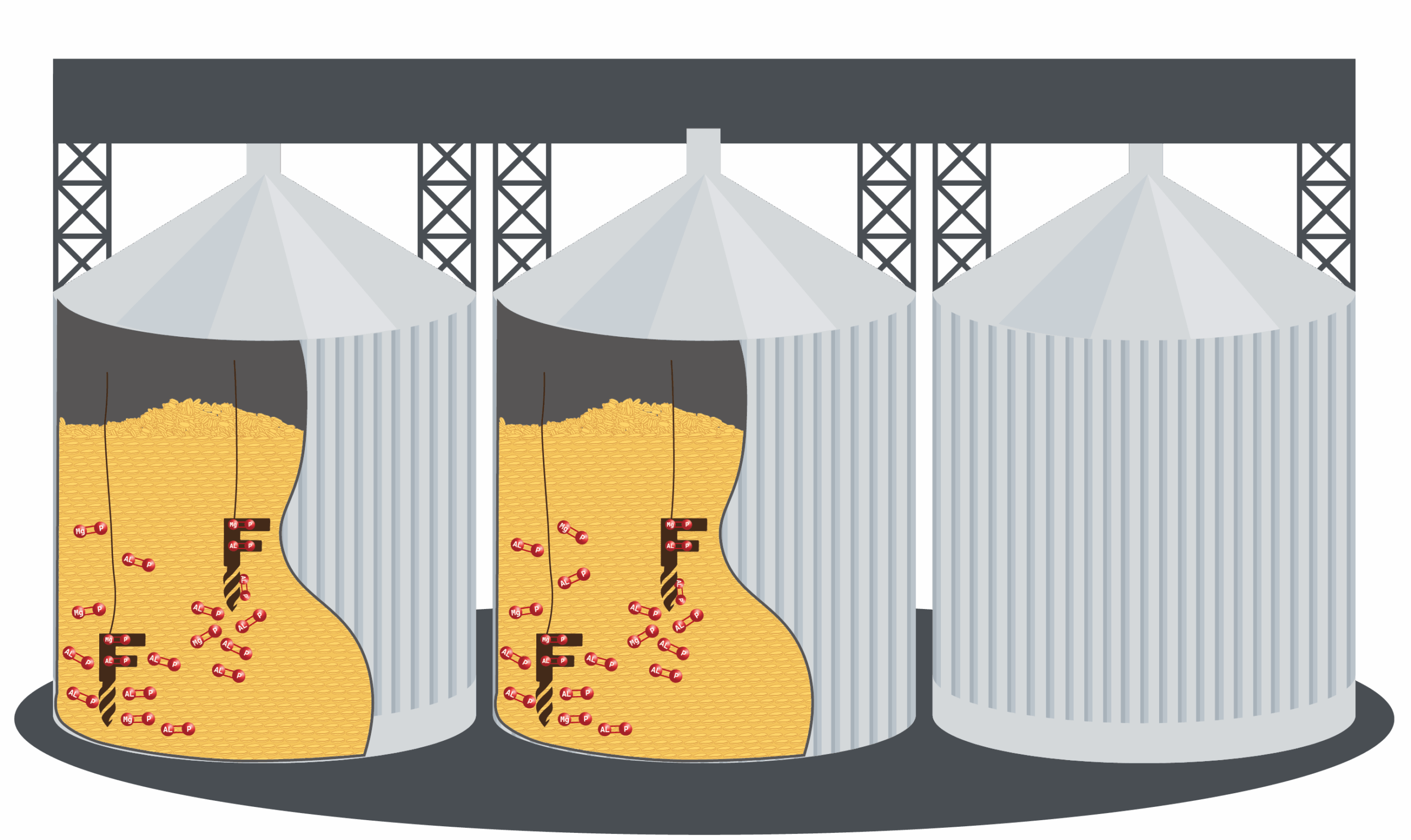
2) Very fast. No more moving grain: the grain fumigation rate in the silo is proportional to the vertical movement of the SGFOne Self-immersing Grain Fumigator within the grain. And on average from 200 tons of grain/hour naar 900 tons of grain/hour.
Savings in production time and man-hours spent on fumigation as much as 10 times.
The SGFOne average vertical movement speed between layers of wheat grain in a silo is 1 meter per minute.
Bijvoorbeeld, the SGFOne can traverse a 30-meter-high silo in both directions (a 60-meter journey) and discharge phosphides layer by layer at specified points on average in 1 hour.
Thus, for a vertical silo of a reinforced concrete grain elevator with a height of 30 M, the grain fumigation rate is 200 tons per hour.
And this is just with one SGFOne device!
Or a 20m high, 18m diameter metal grain bin with a grain capacity of 5,000 tons, three SGFOne Self-immersing Grain Fumigators will fumigate in less than 6 hours, with an average fumigation rate of 840 tons per hour.
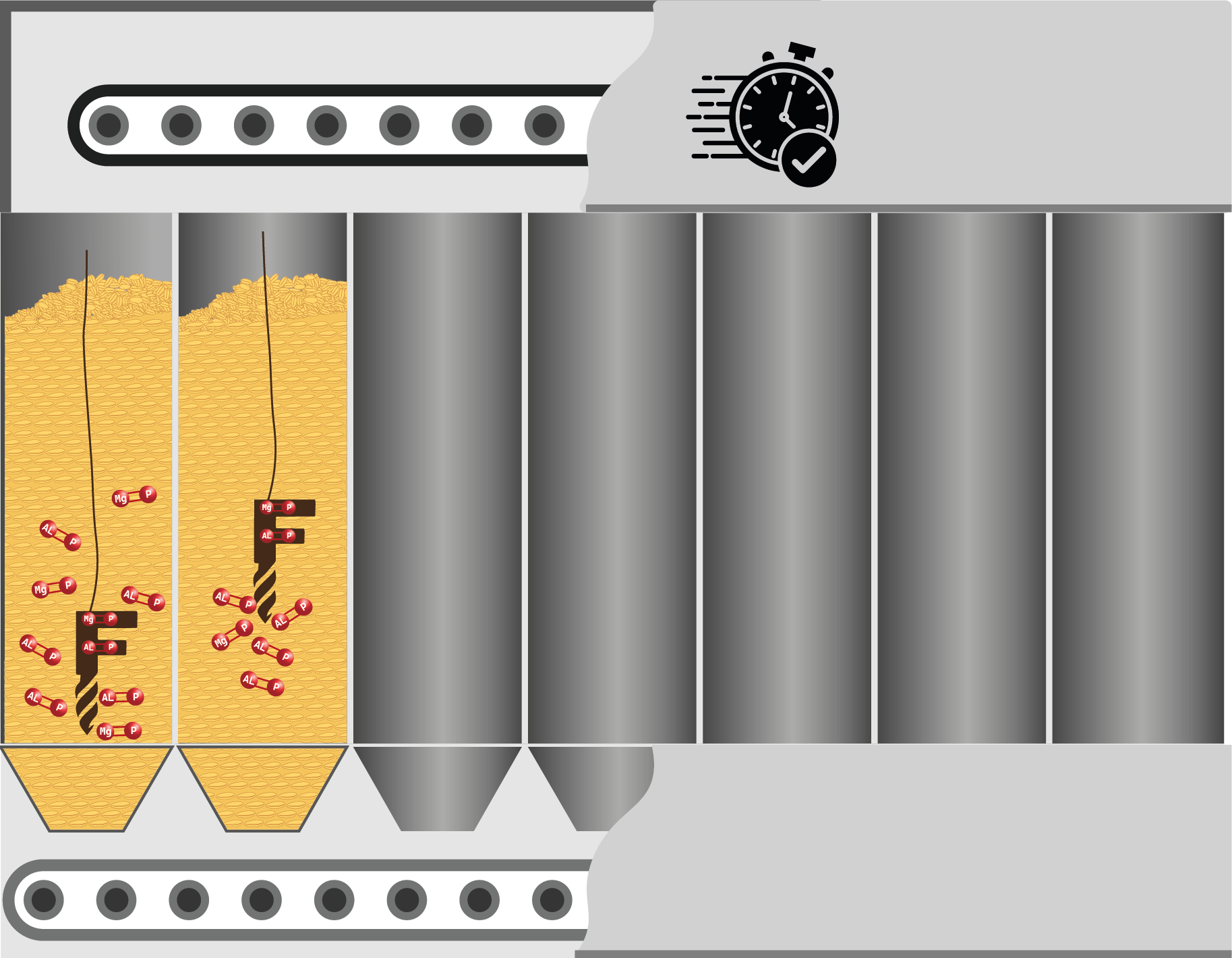
3) Now there will be no downtime for adjacent and neighboring tanks located in the same silo building.
Because the grain remains stationary and the phosphide fumigants are carefully delivered directly to the target point within the stationary grain in a single bin (other tanks and elevator systems are not involved), diffusion does not extend beyond the single fumigated bin.
4) Environmental risks are minimized, there is no grain movement, very precise delivery of phosphides inside the stationary grain, no diffusion of phosphines outside the grain bin.
5) Met SGFOne kunt u selectief slechts één punt in de korrel begassen, op elke diepte (hoogte) van de silo,het is mogelijk om alleen de bron van besmet stationair graan in de graanopslagplaats te begassen.
Dit is precies waar het bij de Fumigatie van Graan op Gegeven Coördinaten-methode om draait.


6) The self-immersing grain fumigator SGFOne, when passing through the thickness of the grain for grain fumigation, spontaneously loosens the grain in the silo bunker over a radius of 1.5 m along the trajectory of vertical movement.
An additional function of the SGFOne is aeration of grain in the silo bunker. The SGFOne can be optionally equipped with an air duct, which is a set of perforated aluminum-magnesium alloy pipes connected to each other with special quick-release couplings for aeration of grain during immersion of the SGFOne for grain fumigation.
If necessary, the self-immersing SGFOne fumigator can insert an air duct (which passes through the grain along the vertical trajectory of the SGFOne path) into the grain to a depth of up to 30 meter. By connecting an air compressor to the air duct, the grain in the silo is aerated by forcing air into the air duct and the distribution of air under pressure in deep layers of grain in a silo bunker. Aeration of grain during fumigation is an additional function that requires additional time.
SGFOne Investment Project Presentation, PDF file